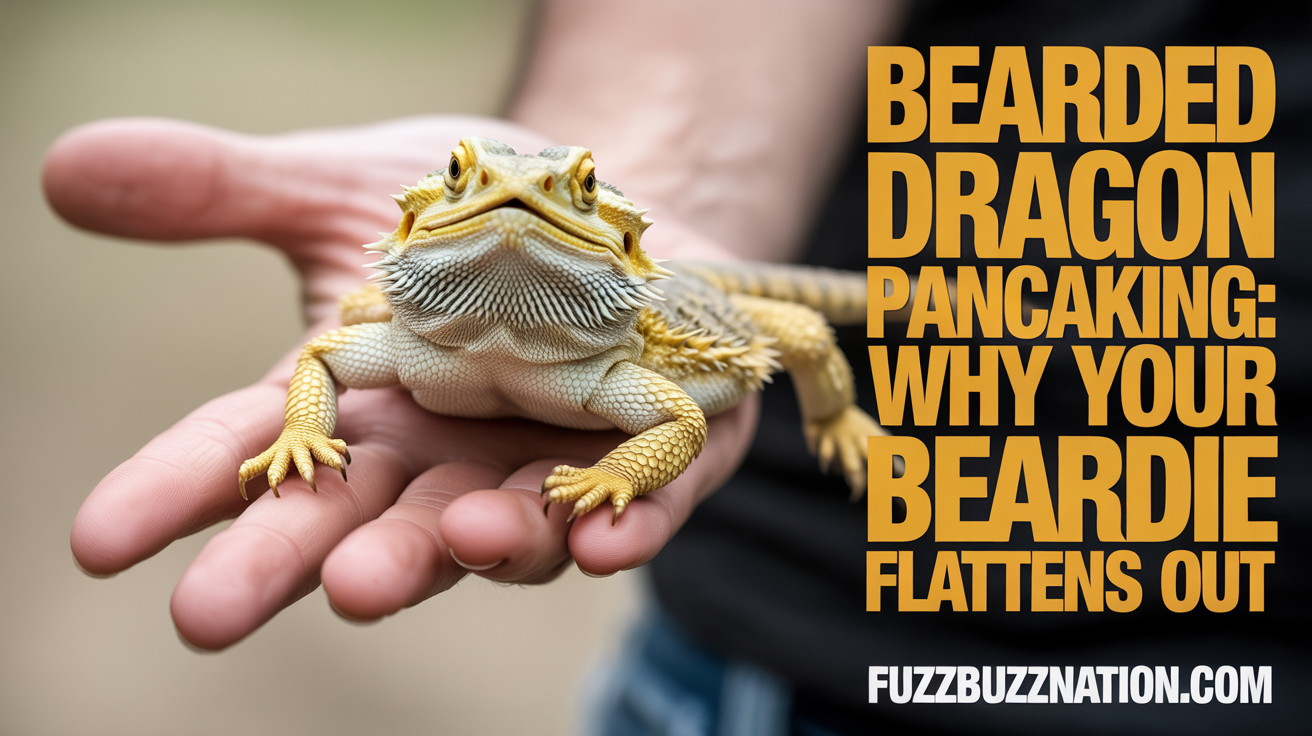
Bearded Dragon Pancaking: Why Your Beardie Flattens Out
When I first witnessed my bearded dragon, Spike, spread himself completely flat like a reptilian pancake, I panicked and rushed him to the emergency vet, convinced something was terribly wrong. The vet chuckled and explained that bearded dragon pancaking is completely normal behavior. After twelve years of keeping beardies and observing hundreds more at the reptile rescue where I volunteer, I’ve learned that this flattening behavior communicates various needs and emotions.
Bearded dragon pancaking occurs when your beardie flattens their body against surfaces, spreading out their ribs and belly to appear wider and thinner. This behavior serves multiple purposes from thermoregulation to showing contentment, and understanding why your dragon pancakes helps you better meet their needs and recognize potential problems.
Why Bearded Dragons Pancake
Thermoregulation and Heat Absorption
The primary reason for bearded dragon pancaking is temperature regulation. By flattening their bodies, beardies maximize surface area exposure to heat sources. My dragon Spike pancakes every morning under his basking lamp, spreading himself paper-thin to absorb maximum warmth after the cooler nighttime temperatures.
In the wild, bearded dragons pancake on sun-warmed rocks to raise their body temperature efficiently. This instinct remains strong in captivity. I’ve observed that my dragons pancake more aggressively when basking temperatures drop below optimal levels—it’s often the first sign that a bulb needs replacing.
The physics behind pancaking is simple but effective. By increasing surface area contact with warm surfaces and exposing more skin to heat lamps, dragons can raise their core temperature 15-20% faster than when maintaining normal posture. Using an infrared thermometer, I’ve measured my dragon’s body temperature rising from 85°F to 105°F within ten minutes of pancaking under his basking spot.
Comfort and Contentment
Not all pancaking relates to temperature. Happy, relaxed bearded dragons often pancake simply because they’re comfortable. My rescue beardie, Luna, pancakes on my chest during our evening bonding time, completely relaxed and content. Her body goes limp, spreading out like melted butter—clearly not for warmth since she’s already at optimal temperature.
This contentment pancaking looks different from thermoregulation pancaking. The dragon appears more relaxed, often with eyes partially closed, and may even fall asleep in this position. After five years of observation, I can instantly distinguish between “I’m cold” pancaking and “I’m blissfully happy” pancaking.
Submission and Fear Response
Pancaking can indicate submission or fear, particularly in younger dragons or new environments. When I introduce rescued beardies to their new habitat, they often pancake against the tank floor, trying to appear less threatening or hide. This defensive pancaking includes darker coloring and a tense, alert posture unlike relaxed pancaking.
Subordinate bearded dragons pancake to show submission to dominant individuals. In my multi-dragon rescue setup (with visual barriers between enclosures), I’ve seen smaller dragons pancake when they spot larger ones, even through glass. This behavior stems from wild hierarchy establishment where pancaking signals “I’m not a threat.”
Normal vs Concerning Pancaking
Healthy Pancaking Signs
Normal pancaking involves a alert, responsive dragon who can easily return to normal posture. My healthy dragons pancake for 15-30 minutes during morning basking, then resume normal activities. They remain bright-eyed, respond to stimuli, and breathe normally while flattened.
Healthy pancaking dragons maintain good coloration—not too dark or pale—and spread evenly without favoring one side. Their bellies touch surfaces completely, and they can lift their heads normally. When I approach, my healthy pancaking dragons either maintain position contentedly or quickly resume normal posture.
When Pancaking Indicates Problems
Excessive pancaking throughout the day often signals improper temperatures. I once helped a friend whose dragon pancaked constantly—their basking spot measured only 85°F instead of the required 105-110°F. After correcting temperatures, pancaking reduced to normal morning sessions.
Asymmetrical pancaking, where one side spreads more than the other, can indicate pain or injury. My rescue dragon with metabolic bone disease pancaked unevenly, avoiding pressure on painful joints. This requires immediate veterinary attention.
Lethargy accompanying pancaking is concerning. If your dragon remains pancaked for hours, doesn’t respond to stimuli, or shows labored breathing while flattened, something’s wrong. I’ve seen this with impaction cases where dragons pancake trying to relieve abdominal discomfort.
Environmental Factors
Temperature Requirements
Proper temperature gradients reduce excessive pancaking. Basking spots should reach 105-110°F for adults, 110-115°F for juveniles. The cool side should maintain 80-85°F. I use digital thermometers with probes at various heights since temperatures vary significantly even inches apart.
Insufficient UVB can cause increased pancaking as dragons attempt to maximize UV exposure. UVB bulbs lose effectiveness over time despite still producing visible light. I replace mine every six months and noticed dramatically reduced pancaking behavior after switching to higher-quality T5 HO bulbs.
Habitat Setup
Surface textures affect pancaking comfort. Rough surfaces like textured tile or reptile carpet provide better grip for comfortable pancaking than smooth glass or paper towels. My dragons show clear preferences, pancaking more frequently on their favorite textures.
Multiple basking platforms at different heights allow dragons to choose optimal pancaking spots. I provide flat rocks, wooden platforms, and hammocks at various distances from heat sources. My dragons use different spots throughout the day as temperatures and their needs change.
Age-Related Pancaking Patterns
Baby Bearded Dragons
Baby beardies pancake more frequently than adults, often seeming to melt into puddles. Their higher metabolism requires more frequent thermoregulation. My baby rescues pancake every 2-3 hours, alternating between basking and activity periods.
Young dragons also pancake from stress more readily. New environments, handling, or seeing larger animals triggers defensive pancaking. I’ve learned to minimize handling during the first week to reduce stress-induced pancaking in young rescues.
Adult vs Senior Dragons
Adult dragons develop predictable pancaking routines. My five-year-old male pancakes for exactly 20 minutes each morning at 8 AM, then again briefly after eating. This consistency indicates good health and proper husbandry.
Senior dragons pancake differently, often needing longer sessions due to slower metabolism. My twelve-year-old rescue requires 45-minute morning pancaking sessions to reach optimal temperature. They may also pancake to relieve arthritis discomfort, spreading weight evenly to reduce joint pressure.
Related Behaviors
Glass Surfing vs Pancaking
Some dragons alternate between glass surfing (scratching at glass) and pancaking, indicating environmental stress. This combination often means temperatures fluctuate too dramatically. After stabilizing temperatures in rescue enclosures, both behaviors typically resolve within days.
Arm Waving and Pancaking
Baby dragons often combine arm waving (slow circular arm motion) with pancaking as dual submission signals. I’ve observed this in young dragons housed where they can see adults. While natural, persistent combination of these behaviors suggests the dragon feels constantly threatened.
Head Bobbing and Pancaking
Dominant dragons sometimes pancake immediately after head bobbing displays, especially during breeding season. My male switches rapidly between assertive head bobbing and relaxed pancaking, seemingly confused by his own hormones. This combination is normal during breeding season but concerning if constant.
Common Misconceptions
“Pancaking Always Means Too Cold”
While temperature regulation is common, assuming all pancaking indicates coldness leads to overheating. I’ve treated dragons with burns from owners who kept raising temperatures trying to stop normal pancaking behavior. Monitor actual body temperatures, not just behavior.
“Only Sick Dragons Pancake”
This misconception causes unnecessary veterinary visits. Normal dragons pancake daily. My healthiest dragon pancakes more than any other, simply because she thoroughly enjoys basking. Learning your dragon’s normal pancaking pattern helps identify when behavior becomes abnormal.
“Dragons Shouldn’t Pancake on Humans”
Many sources claim pancaking on owners indicates the dragon sees you as a heat source only. However, my bonded dragons pancake on me even when already warm, showing trust and affection. Context matters more than the behavior itself.
Optimizing Pancaking Conditions
Proper Lighting Setup
Quality UVB and basking bulbs reduce excessive pancaking. I use combination fixtures with both UVB and halogen basking bulbs, creating overlapping zones where dragons can pancake while receiving both heat and UVB. This mimics natural sunlight more effectively than separate bulbs.
Photoperiod affects pancaking frequency. During winter months with 10-hour light cycles, my dragons pancake more intensively during available basking time. Summer schedules with 14-hour days show more distributed, shorter pancaking sessions.
Seasonal Adjustments
Brumation affects pancaking patterns significantly. Pre-brumation dragons pancake less despite normal temperatures, while post-brumation shows increased pancaking as metabolism accelerates. I adjust basking temperatures seasonally, raising them 5°F in spring to accommodate increased pancaking needs.
Room temperature impacts pancaking behavior. During winter when ambient temperatures drop, dragons pancake longer even with proper basking spots. I use ceramic heat emitters to maintain nighttime temperatures above 70°F, reducing morning pancaking duration.
Frequently Asked Questions
How long should a bearded dragon pancake each day? Normal pancaking lasts 15-45 minutes per session, usually 2-3 times daily. My adults average 60-90 minutes total daily pancaking, mostly during morning basking. Babies pancake more frequently but for shorter durations. Constant pancaking exceeding three hours suggests temperature problems.
Why does my bearded dragon pancake at night? Nighttime pancaking often indicates temperatures dropping too low. Beardies shouldn’t need to thermoregulate at night if temperatures stay above 70°F. My dragon who pancaked nightly stopped after I added a ceramic heat emitter maintaining 75°F nighttime temperatures.
Can bearded dragons pancake too much? Yes, excessive pancaking can indicate problems. Constant pancaking suggests improper temperatures, illness, or stress. My rescue dragon with parasites pancaked constantly trying to maintain body temperature despite proper heating. After treatment, pancaking returned to normal patterns.
Should I worry if my dragon never pancakes? Some dragons pancake less visibly than others. If your dragon maintains proper body temperature, eats well, and shows no illness signs, minimal pancaking isn’t concerning. My female rarely does full pancaking, preferring partial flattening. Individual variation is normal.
Does pancaking mean my dragon trusts me? When dragons pancake while being held or near you, it generally indicates trust and comfort. My bonded dragons only pancake on people they know well. New handlers get defensive postures instead. Relaxed pancaking during handling shows positive relationship development.
Understanding Your Dragon’s Pancaking
Bearded dragon pancaking is natural, multifaceted behavior serving essential functions from temperature regulation to emotional expression. Learning your individual dragon’s pancaking patterns helps identify their needs and spot potential problems early.
Monitor pancaking frequency, duration, and context. Changes in established patterns often provide the first indication of husbandry issues or health problems. My daily observation logs helped identify a failing UVB bulb weeks before other symptoms appeared, simply through increased pancaking behavior.
Embrace pancaking as part of your dragon’s natural behavior repertoire. Watching a completely flattened, content beardie soaking up warmth remains one of the most endearing sights in reptile keeping. Understanding why they pancake helps you provide optimal care while appreciating these fascinating creatures’ unique behaviors.