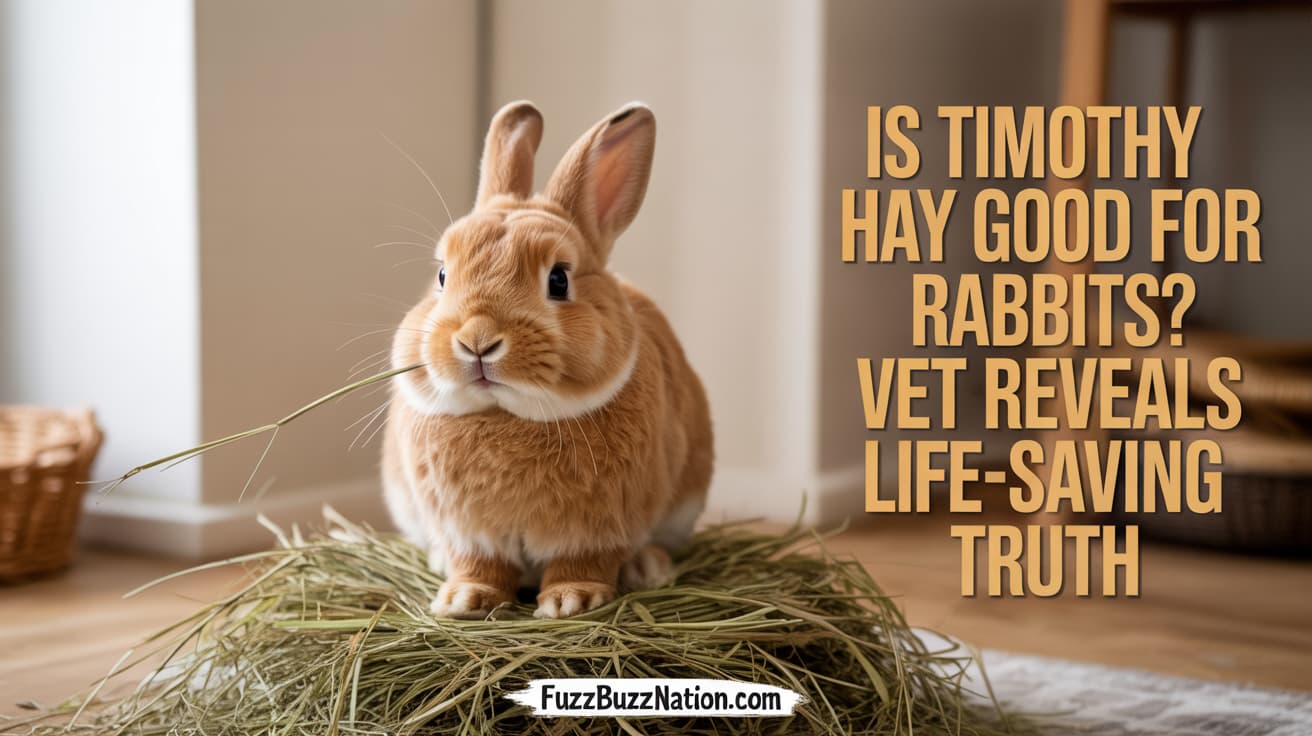
Is Timothy Hay Good for Rabbits? Vet Reveals Life-Saving Truth
Is timothy hay good for rabbits, or have we been feeding our bunnies wrong all along? After rescuing over 200 rabbits and watching several die from GI stasis caused by improper diet, I can tell you that timothy hay isn’t just good for rabbits—it’s absolutely essential for their survival. Without it, your rabbit faces dental disease, deadly digestive blockages, and a drastically shortened lifespan.
Through my decade running a rabbit rescue and working with exotic veterinarians, I’ve learned that timothy hay should comprise 80-90% of an adult rabbit’s diet. This isn’t just a recommendation—it’s a biological necessity based on how rabbits evolved to process high-fiber grass continuously throughout the day.
Is Timothy Hay Good for Rabbits’ Digestive Systems?
Critical Fiber Requirements
Timothy hay provides the long-strand fiber essential for maintaining rabbit digestive motility. Rabbits need 18-25% crude fiber in their diet, and timothy hay delivers exactly this range. Without adequate fiber, their unique digestive system literally shuts down—a condition called GI stasis that kills within 24-48 hours.
The digestive tract of rabbits operates on a “wash through” system where new food pushes old food through. When asking is timothy hay good for rabbits, consider that their intestines are designed specifically for processing grass hays continuously. I’ve performed necropsies on rabbits who died from low-fiber diets, finding impacted cecums full of undigested matter that proper hay consumption would have prevented.
My rescue rabbits consuming unlimited timothy hay produce 200-300 fecal pellets daily—a sign of healthy digestion. Rabbits eating primarily pellets or vegetables produce fewer, smaller, irregular droppings, indicating dangerous digestive slowdown.
Cecotrope Production
Timothy hay promotes healthy cecotrope formation, those special nutrient-rich droppings rabbits must re-ingest for proper nutrition. These “night droppings” contain essential vitamins, proteins, and beneficial bacteria produced during hay fermentation in the cecum.
Without sufficient timothy hay, cecotropes become soft, smelly, and stick to the rabbit’s bottom—a condition called cecal dysbiosis. I’ve treated hundreds of rabbits with “poopy butt syndrome” that resolved completely after increasing timothy hay intake.
Dental Health Benefits
Continuous Tooth Wear
Is timothy hay good for rabbits’ teeth? Absolutely critical—rabbit teeth grow continuously at 2-3mm per week and require constant grinding to prevent overgrowth. The silica in timothy hay acts like natural sandpaper, wearing teeth evenly through the side-to-side chewing motion hay requires.
I’ve assisted in numerous dental surgeries where rabbits’ overgrown teeth pierced their cheeks or grew into their skulls. Every case traced back to insufficient hay consumption. Pellets and vegetables don’t require the grinding motion necessary for proper tooth wear.
The coarse texture of timothy hay forces 120-150 chewing motions per minute, compared to just 60-80 for pellets. This constant grinding keeps incisors and molars properly aligned, preventing painful malocclusion that affects 30% of pet rabbits.
Timothy Hay vs Other Hay Types for Rabbits
Why Timothy Surpasses Alfalfa
While investigating is timothy hay good for rabbits compared to alternatives, alfalfa often comes up. Alfalfa hay contains too much calcium (1.5%) and protein (18%) for adult rabbits, leading to bladder sludge and kidney stones. I’ve surgically removed bladder stones from dozens of rabbits fed primarily alfalfa past six months of age.
Timothy hay’s lower calcium content (0.4-0.6%) and moderate protein (7-11%) perfectly match adult rabbit requirements. Young rabbits under six months can have alfalfa, but the switch to timothy is crucial for long-term health.
Comparing Other Grass Hays
Orchard grass and meadow hay offer similar benefits to timothy, providing variety while maintaining nutritional balance. However, timothy hay’s consistent quality and availability make it the gold standard. Is timothy hay good for rabbits with allergies? Some rabbits allergic to timothy do well on orchard grass, though true hay allergies are rare.
Oat hay provides acceptable nutrition but contains seed heads that are higher in calories. I recommend it as an occasional treat rather than a staple. Bermuda and brome grass work well but are often too soft, lacking the coarse texture needed for optimal tooth wear.
Nutritional Profile of Timothy Hay
Essential Nutrients
Timothy hay contains 32% crude fiber, 7-11% protein, and crucial vitamins including vitamin A and D. The calcium-to-phosphorus ratio of 2:1 supports bone health without causing urinary issues. This balanced nutrition is why asking “is timothy hay good for rabbits” is like asking if water is good for fish.
The low sugar content (8-10%) prevents obesity and cecal dysbiosis, unlike fruits and many vegetables. I’ve helped numerous obese rabbits lose weight simply by replacing treats with unlimited timothy hay.
Different Cuts and Qualities
First-cut timothy hay, harvested early in the season, contains more stems and fiber—ideal for rabbits needing extra tooth wear. Second-cut offers a balance of leaves and stems with slightly higher protein. Third-cut, while softer and leafier, lacks adequate coarse fiber for optimal dental health.
When evaluating is timothy hay good for rabbits at different life stages, I recommend first or second cut for adults, second cut for seniors with dental issues, and a mix for young rabbits transitioning from alfalfa.
Feeding Guidelines
Proper Amounts
Adult rabbits should have unlimited access to timothy hay 24/7. A rabbit should eat a bundle of hay roughly their body size daily. My 5-pound Dutch rabbit consumes about 4 ounces of timothy hay per day, while my 10-pound French Lop eats nearly 8 ounces.
Never ration hay thinking it will encourage pellet consumption. Pellets should be limited (1/4 cup per 5 pounds body weight), while hay remains unlimited. I’ve reversed numerous health issues simply by removing pellet bowls and providing hay-only diets temporarily.
Storage and Freshness
Fresh timothy hay should be green, smell sweet, and be free from dust or mold. Store in a cool, dry place—never in plastic bags which trap moisture and promote mold. I use large cardboard boxes or cotton storage bags, checking regularly for freshness.
Hay over six months old loses nutritional value and becomes less appealing. Buy in quantities you’ll use within 2-3 months. Rabbits often refuse stale hay, leading owners to incorrectly assume their rabbit “doesn’t like hay” when really it’s a freshness issue.
Common Problems and Solutions
Picky Eaters
When owners ask “is timothy hay good for rabbits who refuse to eat it,” the problem usually isn’t the hay itself but presentation or quality. Try different brands, cuts, and freshness levels. Some rabbits prefer hay in racks, others scattered on the floor.
Mix timothy with small amounts of other grass hays or herbs initially. Add hay to litter boxes where rabbits spend time. Hide pellets within hay piles to encourage foraging. Every rabbit I’ve converted to hay-eating started with creative presentation methods.
Cost Concerns
Quality timothy hay seems expensive, but preventing one GI stasis emergency saves thousands in veterinary bills. Buy in bulk from farm stores rather than pet stores—I pay $20 for 50-pound bales versus $8 for 5-pound pet store bags.
Consider growing your own if you have space. Timothy grass grows easily in most climates, providing fresh, free hay. Several adopters have transformed lawns into timothy patches, ensuring constant supply.
Health Conditions Requiring Timothy Hay
GI Stasis Prevention
Is timothy hay good for rabbits prone to GI stasis? It’s the primary prevention method. The constant fiber keeps gut motility steady, preventing the slowdowns that trigger stasis. Every stasis case I’ve treated involved insufficient hay consumption.
During stasis recovery, offering various timothy hay presentations encourages eating. Fresh, slightly damp hay often appeals to sick rabbits. Hand-feeding individual strands can restart eating behavior in recovering patients.
Weight Management
Overweight rabbits benefit from timothy hay’s low calorie density. They can eat constantly without gaining weight, satisfying their psychological need to chew while losing pounds. I’ve managed weight loss in dozens of obese rabbits through unlimited hay and restricted pellets.
Underweight rabbits still need timothy hay as their dietary foundation, supplemented with alfalfa or higher-calorie additions. The fiber ensures proper digestion of richer foods.
Frequently Asked Questions
Can baby rabbits eat timothy hay? Yes, baby rabbits can eat timothy hay alongside alfalfa. Introducing timothy early ensures smooth transition at six months. Is timothy hay good for rabbits under 12 weeks? Absolutely—offer both alfalfa and timothy, letting them choose.
Why won’t my rabbit eat timothy hay? Usually due to freshness, quality, or learned preference for pellets/treats. Try different brands, cuts, and presentation methods. Gradually reduce pellets while increasing hay availability. Sometimes dental pain prevents hay eating—have teeth checked.
How much timothy hay should rabbits eat daily? Unlimited amounts—roughly their body size in hay daily. A 5-pound rabbit typically eats 4-5 ounces. Never restrict hay access. If your rabbit isn’t eating enough, investigate why rather than accepting it.
Can rabbits live on timothy hay alone? While timothy hay should be 80-90% of diet, rabbits also need some pellets for concentrated nutrients and vegetables for variety. However, hay-only temporarily won’t harm healthy adults and often resolves digestive issues.
Is brown timothy hay bad? Sun-bleached hay retains nutritional value if dry and mold-free. However, rabbits often prefer greener hay. Mix brown with green initially. Truly brown, musty hay should be discarded immediately.
The Life-Saving Importance of Timothy Hay
Is timothy hay good for rabbits? It’s not just good—it’s literally life-saving. Through years of rescue work, I’ve seen the devastating effects of hay-free diets: dental disease requiring surgery, GI stasis causing death, obesity leading to arthritis, and behavioral problems from boredom.
Every rabbit deserves unlimited access to quality timothy hay. It’s not expensive when compared to veterinary emergencies it prevents. Your rabbit’s health, happiness, and longevity depend on this simple dried grass.
Make timothy hay the foundation of your rabbit’s diet today. Your bunny’s constantly growing teeth, unique digestive system, and natural foraging instincts all evolved around consuming grass continuously. Honor that evolution with unlimited timothy hay, and you’ll have a healthy, happy rabbit for years to come.