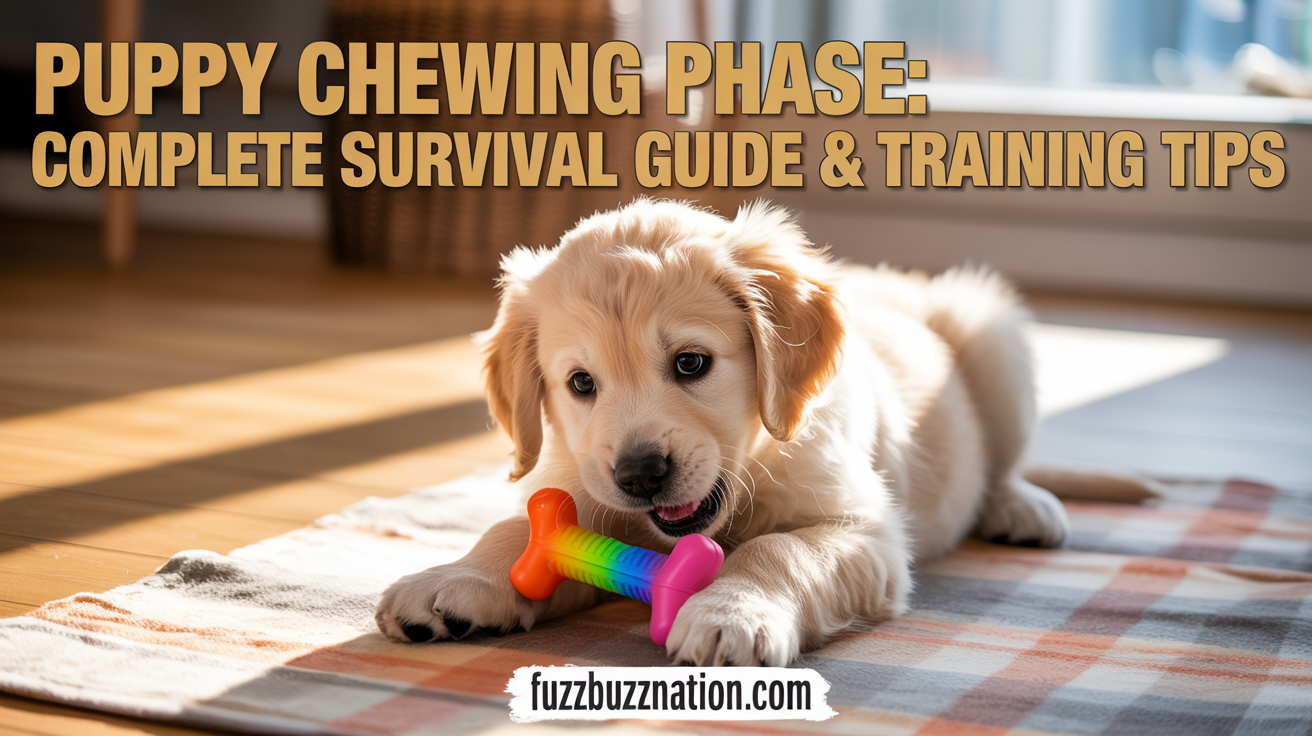
Puppy Chewing Phase: Complete Survival Guide & Training Tips
The puppy chewing phase nearly drove me to tears when I brought home my first Golden Retriever puppy fifteen years ago. Within three days, she’d destroyed two pairs of shoes, gnawed through a laptop charger, and somehow managed to eat half of my wooden coffee table leg. Through raising eight puppies since then and fostering dozens more, I’ve learned that this destructive phase is completely normal—and absolutely manageable with the right approach.
Every puppy goes through an intensive chewing phase that typically starts around 3-4 weeks old and can last until 7-8 months, with some breeds continuing destructive chewing up to two years. Understanding why puppies chew, when it peaks, and how to redirect this behavior will save your sanity, your belongings, and potentially your puppy’s life.
Understanding Why Puppies Chew Everything
Puppies explore their world through their mouths, much like human babies explore with their hands. During my work with shelter puppies, I’ve observed that chewing serves multiple critical developmental purposes beyond simple teething relief. It’s how puppies learn about textures, tastes, and what’s safe or dangerous in their environment.
Teething pain drives much of the chewing behavior between 3-6 months when puppies lose their 28 baby teeth and grow 42 adult teeth. My current puppy, Max, went through a phase where his gums were so inflamed that he’d whimper while eating. The pressure from chewing provides relief, similar to how human babies need teething rings.
Boredom and excess energy fuel destructive chewing, especially in high-energy breeds. A tired puppy is generally a well-behaved puppy. When I increased my Border Collie puppy’s exercise from 20 to 40 minutes daily (appropriate for her age), her destructive chewing decreased by roughly 70%.
Timeline of the Puppy Chewing Phase
3-8 Weeks: Early Exploration
Puppies begin testing their teeth on littermates and toys around three weeks old. During this phase with their mother and siblings, they learn bite inhibition through play. When I observe our foster litters, puppies who play-bite too hard get corrected by their siblings’ yelps, teaching crucial early lessons.
3-4 Months: Teething Begins
Baby teeth start falling out around 12-16 weeks, though you’ll rarely find them—puppies usually swallow them harmlessly. During this phase, my Labrador puppy chewed constantly, preferring soft rubber toys and frozen washcloths. I noticed blood spots on toys, which is completely normal as baby teeth loosen.
4-6 Months: Peak Destruction
This is when puppy chewing reaches maximum intensity. Adult teeth are erupting, causing significant discomfort. My German Shepherd destroyed three TV remotes during this phase despite having dozens of appropriate toys available. Supervision becomes absolutely critical during these months.
6-8 Months: Gradual Decrease
Most puppies show decreased chewing intensity as adult teeth fully emerge. However, the habit can persist without proper training. My mistake with my first puppy was assuming she’d naturally stop chewing inappropriate items—she didn’t until I actively trained her.
8-24 Months: Adolescent Chewing
Some breeds, particularly large breeds and working dogs, continue recreational chewing through adolescence. My two-year-old Rottweiler still requires daily chew sessions to stay content, though he now knows exactly what’s his to chew.
Managing Destructive Chewing
Puppy-Proofing Your Home
Remove or secure anything within puppy reach that you value or that could harm them. I learned this expensively when my puppy chewed through expensive headphones I’d left on the coffee table. Electrical cords need cord protectors or to be tucked away completely—my friend’s puppy required emergency surgery after chewing through a plugged-in phone charger.
Use baby gates to limit access to certain rooms. My puppies are never unsupervised in bedrooms or the home office where expensive items and dangerous objects are most common. The living room becomes the designated puppy-safe zone with nothing irreplaceable at tooth level.
Appropriate Chew Toys
Provide variety in textures and hardness. My current puppy has fifteen different chew toys that I rotate weekly to maintain novelty. Rubber Kong toys stuffed with frozen peanut butter can occupy a teething puppy for 30-45 minutes. Rope toys satisfy the need to tug and shake while cleaning teeth.
Size matters significantly—toys should be large enough that puppies can’t swallow them but small enough to carry comfortably. I follow the “bigger than their mouth” rule: if they can fit the entire toy in their mouth, it’s too small. My veterinarian showed me X-rays of puppies who’d swallowed “appropriate sized” toys that were actually too small.
Natural chews like bully sticks, yak cheese, and raw bones (never cooked) provide long-lasting entertainment. However, always supervise these sessions. My puppy once tried to swallow a 4-inch piece of bully stick whole, requiring quick intervention.
Training Techniques
Redirect immediately when catching inappropriate chewing. Don’t punish after the fact—puppies can’t connect past actions with current consequences. When I catch my puppy chewing furniture, I make a sharp “ah-ah” sound, then immediately offer an appropriate toy, praising enthusiastically when he takes it.
Teach “leave it” and “drop it” commands early. These potentially life-saving commands prevented my puppy from swallowing a chicken bone during a walk. Start training with low-value items, rewarding compliance with high-value treats, then gradually increase difficulty.
Positive reinforcement works far better than punishment. When I see my puppy choosing his toys over my belongings, I reward with treats and praise. This builds positive associations with appropriate chewing choices.
Solutions for Common Chewing Problems
Furniture and Baseboards
Apply bitter apple spray or citrus-scented deterrents to frequently targeted areas. Reapply daily initially—my puppy needed two weeks of consistent application before avoiding treated furniture. Some puppies ignore bitter sprays, so test different deterrent types.
For persistent furniture chewers, I’ve had success with aluminum foil or double-sided tape on affected areas. The texture deters most puppies. One creative solution involved surrounding my couch legs with empty soda cans filled with pennies—the noise when bumped startled my puppy away.
Shoes and Clothing
Never give old shoes as toys—puppies can’t distinguish between old and new shoes. This mistake cost me three pairs of running shoes with my first puppy. Keep shoes in closed closets and laundry in covered hampers. My rule: if it smells like you, puppies want to chew it.
Create designated spots for items puppies commonly target. Installing wall hooks by the door for leashes and bags kept them away from my teething puppy. Teaching family members to consistently use these spots is often harder than training the puppy.
Safe Alternatives
Frozen washcloths provide incredible teething relief. I keep five in the freezer, rotating them throughout the day. Wet, twist, and freeze for a simple, free chewing solution. My teething puppies would choose frozen washcloths over expensive toys during peak teething pain.
Ice cubes offer temporary relief and entertainment. Large ice cubes last longer and are harder to choke on. Some puppies love plain ice, while others prefer ice made from low-sodium chicken broth. Always supervise ice chewing as aggressive chewers might crack teeth.
Health and Safety Concerns
Dangerous Items
Certain items require immediate veterinary attention if swallowed. Batteries, especially button batteries, can cause fatal chemical burns. My neighbor’s puppy required emergency surgery after swallowing AAA batteries from a remote control. Sharp objects, string, and fabric can cause intestinal blockages or perforations.
Toxic substances puppies might chew include xylitol-containing gum, chocolate, certain plants, and human medications. I keep the pet poison hotline number on my refrigerator and saved in my phone. Quick action saves lives—induced vomiting within two hours often prevents serious poisoning.
Signs of Problems
Watch for symptoms indicating your puppy swallowed something dangerous: repeated vomiting, refusing food, lethargy, unable to defecate, or visible distress. My puppy once swallowed a sock, and the first sign was refusing his favorite treats. Immediate veterinary intervention saved him from requiring surgery.
Damaged teeth from inappropriate chewing can cause long-term problems. Check your puppy’s mouth weekly for broken teeth, bleeding gums beyond normal teething, or bad breath indicating infection. Fractured teeth are painful and often require extraction.
Breed-Specific Tendencies
Power chewers like Pit Bulls, Rottweilers, and German Shepherds need extra-durable toys. My Pit Bull mix destroyed “indestructible” toys within hours until I found genuinely tough options like black Kong toys and GoughNuts. These breeds often continue heavy chewing into adulthood.
Retrievers and hunting breeds have softer mouths but constant oral fixation. My Golden Retriever always needs something in her mouth, even at five years old. These breeds do well with multiple toys available and often enjoy carrying toys around without destroying them.
Small breeds aren’t exempt from destructive chewing despite their size. My friend’s Chihuahua puppy destroyed multiple phone charging cables and baseboards. Tiny teeth can still cause expensive damage. Small breed puppies need appropriately sized toys—regular toys are often too large and frustrating.
Frequently Asked Questions
When do puppies stop chewing everything? Most puppies significantly reduce destructive chewing by 6-8 months when adult teeth fully emerge. However, some dogs continue recreational chewing throughout their lives. My five-year-old Lab still enjoys a daily chew session, but she knows what’s appropriate to chew.
Is it normal for puppies to chew on walls and baseboards? Yes, many puppies target walls and baseboards, especially during peak teething. The texture provides relief for sore gums. However, this behavior needs immediate redirection to prevent property damage and potential health issues from ingesting paint or drywall.
What if my puppy swallows something dangerous? Contact your veterinarian or pet poison hotline immediately. Never induce vomiting without professional guidance—some items cause more damage coming back up. Keep hydrogen peroxide on hand for induced vomiting but only use under veterinary direction.
Why does my older puppy still chew everything? Continued destructive chewing past eight months often indicates boredom, anxiety, or insufficient exercise. Increase physical and mental stimulation. Some dogs develop compulsive chewing requiring behavioral intervention. My friend’s puppy needed anxiety medication alongside training to overcome destructive chewing.
Can I use old socks as chew toys? Never give socks, even old ones, as toys. Puppies can’t distinguish between old and new socks, leading to expensive sock-eating habits. Swallowed socks frequently cause intestinal blockages requiring surgery. I learned this through a $3,000 emergency surgery when my puppy swallowed a sock.
Surviving the Puppy Chewing Phase
The puppy chewing phase tests every owner’s patience, but remember it’s temporary and completely normal. With consistent training, appropriate outlets, and vigilant supervision, you’ll guide your puppy through this challenging phase while protecting both your belongings and their safety.
Stay patient and maintain perspective—your puppy isn’t chewing maliciously but following natural instincts. Every correction is a teaching opportunity, and every appropriate chew choice deserves celebration. My most destructive puppy chewer became my best-behaved adult dog through consistent, positive training during this critical phase.
Keep emergency numbers handy, puppy-proof thoroughly, and invest in quality chew toys. The money spent on appropriate toys is nothing compared to emergency surgery or replacing destroyed furniture. Most importantly, enjoy this phase despite its challenges—your puppy will grow up faster than you expect, and you might even miss finding the occasional chewed sock.